Mysteries of Muscle and Movement: From Molecular Motors to Lifelong Mobility
Date: Tuesday, October 20 Talk and Q&A: 4–5 p.m. Reception: 5–6 p.m. Location: Crystal Cove Auditorium, UCI Student Center, 311 West Peltason Drive, Irvine
The Charlie Dunlop School of Biological Sciences at UC Irvine invites you to attend the Fall 2026 Dean’s Distinguished Lecture, featuring Monica Daley, Ph.D., director of the Center for Integrative Movement Sciences and professor in the Department of Ecology & Evolutionary Biology on October 20, 2026, in the Crystal Cove Auditorium at the UC Irvine Student Center.
This event is free and open to the public. All are welcome to attend. Food will be provided at the reception. If you have questions about this event, please emailbiosci-events@uci.edu.
About the Speaker:
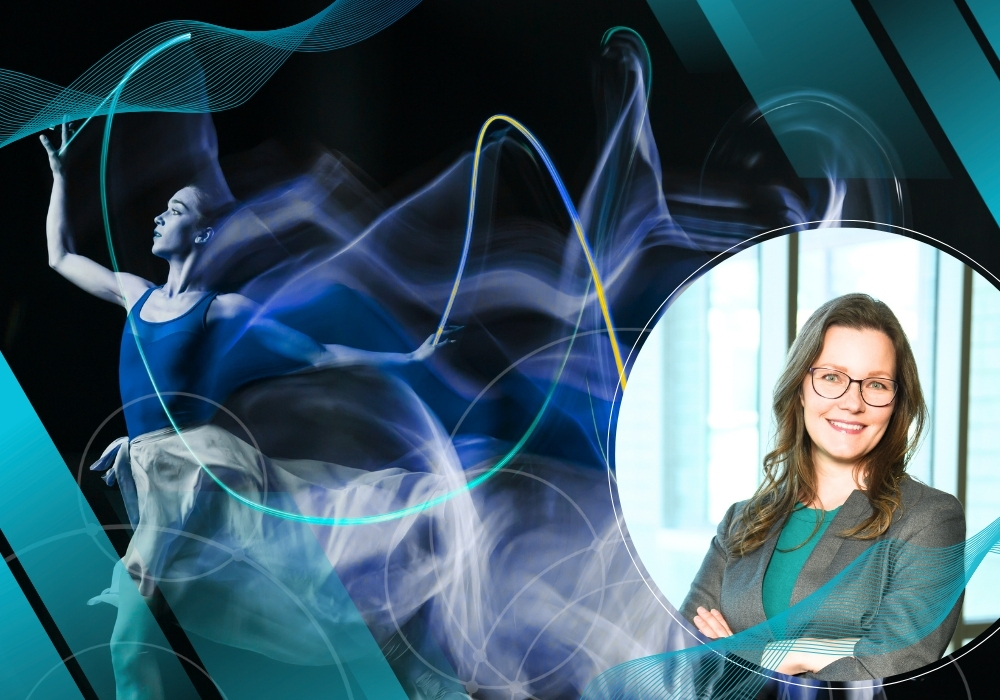
Monica Daley, PhD Professor, Department of Ecology & Evolutionary Biology Director, Center for Integrative Movement Sciences
About Professor Daley’s Research: Most of us take for granted the ability to recover from a stumble or navigate uneven ground. Daley studies the biology that makes this possible: how muscles, tendons, skeletal mechanics and neural circuits work together to enable movement that is agile, stable and economical.
About Professor Daley’s Research: Most of us take for granted the ability to recover from a stumble or navigate uneven ground. Daley studies the biology that makes this possible: how muscles, tendons, skeletal mechanics and neural circuits work together to enable movement that is agile, stable and economical. Research on movement control has long centered on the brain, but neural control acts through the physics of the body and environment. Daley’s laboratory measures what muscles do inside freely moving animals as the terrain changes underfoot. Muscle is unlike any material engineers have built, and the models still used to describe it date to the 1920s and 1930s. Closing the gap in understanding of muscle takes a team larger than any single laboratory. Daley directs a nationwide team working across scales from molecular machinery of muscle contraction to people moving through complex environments, with the aim to translate foundational biology into clinical and technological innovations that support lifelong mobility and health.
About Professor Daley: Monica A. Daley is Professor of Ecology and Evolutionary Biology at the University of California, Irvine, with joint appointments in Biomedical Engineering and Mechanical and Aerospace Engineering.
About Professor Daley: Monica A. Daley is Professor of Ecology and Evolutionary Biology at the University of California, Irvine, with joint appointments in Biomedical Engineering and Mechanical and Aerospace Engineering. Daley earned her B.S. in Biology at the University of Utah, where she was inspired to become a physiologist through undergraduate research on human running and breathing. She spent a year as a research technician investigating motor control of singing in zebra finches, which initiated a lifelong passion for understanding the interplay between muscle mechanics and neural control. She earned her Ph.D. in Organismic and Evolutionary Biology at Harvard University as a Howard Hughes Medical Institute Predoctoral Fellow, then trained in neuromechanics and human rehabilitation as an NSF Postdoctoral Fellow at the University of Michigan. From 2008 to 2019 she was on the faculty of the Structure and Motion Laboratory at the Royal Veterinary College in London, leading research on movement in diverse animal species. She joined UCI in 2019.
Daley directs the Center for Integrative Movement Sciences, an interdisciplinary research and training program connecting UCI scientists and students to a nationwide network of movement researchers. Her own research spans muscle physiology, biomechanics, sensorimotor control and bio-inspired robotics, and she collaborates with clinicians, engineers and roboticists. She is passionate about mentoring researchers at every career stage, from undergraduates through faculty colleagues. Daley received the Human Frontier Science Program Young Investigator Award, serves as a Monitoring Editor of the Journal of Experimental Biology, and is a Fellow of the American Society of Biomechanics.