
Irvine, Calif., August 25, 2026 — One of biology’s enduring challenges is explaining how cells carrying the same genetic instructions develop into such different organs like the heart, brain and limbs. Part of the answer lies in enhancers, short stretches of DNA that act like switches, telling genes when and where to turn on. These switches may look like strings of just A’s, T’s, G’s and C’s, but scientists still don’t fully understand what makes them turn on in specific tissues and stay off in others — let alone how to design them from scratch.
Now, a team led by researchers at the Research Institute of Molecular Pathology in Vienna, together with the laboratory of Associate Professor Evgeny Kvon at the UC Irvine Charlie Dunlop School of Biological Sciences, has done just that with the help of deep machine learning. In a study recently published in Nature Genetics, the researchers successfully designed artificial DNA switches that function in living mouse embryos. By learning to design these switches from scratch, their study takes a major first step toward better studying developmental disorders and eventually developing more targeted gene-based therapies.
To understand what makes these DNA switches turn on in some tissues but not others, the researchers trained computer models using maps of DNA accessibility from the developing mouse heart, limbs and brain. They then refined these models with previously experimentally validated enhancers. Using what the models learned, they designed 15 synthetic DNA sequences that do not occur naturally in the mouse or human genome.
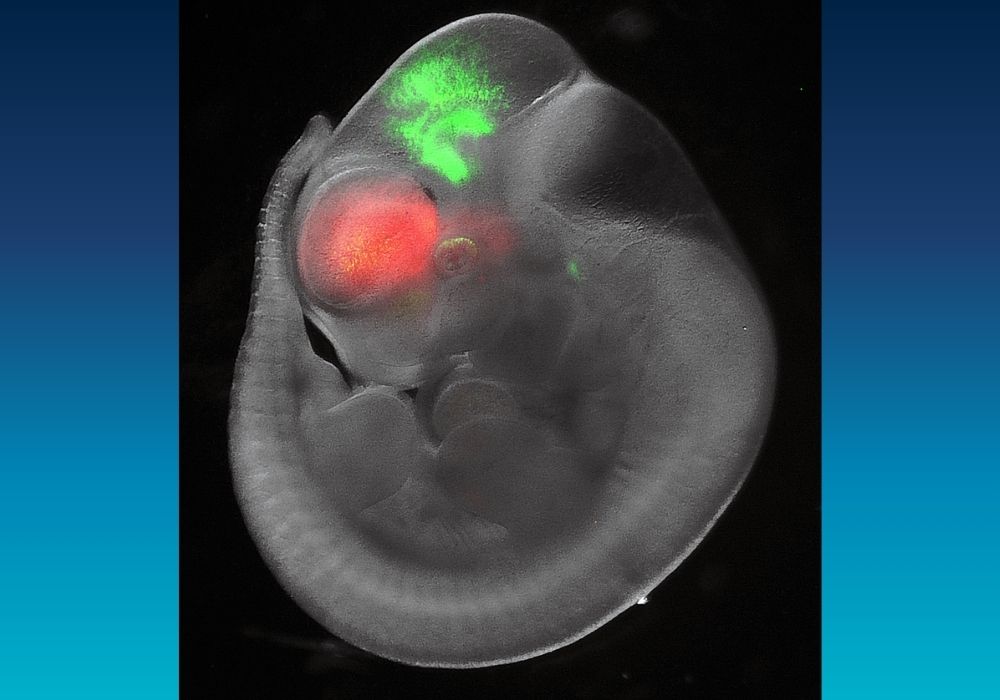
Kvon’s UC Irvine team led the test of whether the computer-designed sequences would work in a living mammal. Researchers linked each sequence to a visible marker and placed it in developing mouse embryos, revealing where the switch became active. Remarkably, all 15 showed activity in the intended tissue. Most heart and central nervous system designs were limited largely to their targets, while the limb designs also showed activity in related developing tissues.
“The biggest challenge was testing completely artificial DNA sequences, designed by a machine, inside a living embryo, with no guarantee they would work,” Kvon said. “There was a real possibility the embryo would simply ignore them. However, it worked!”
The findings suggest that deep learning did more than identify patterns in existing DNA; it learned enough of the biological language to write functional instructions. “This shows that the rules governing when and where genes turn on are encoded in our DNA sequence itself, and that we can now read and write those rules with the help of machine learning,” Kvon said.
Synthetic enhancers could one day serve as precise delivery instructions for gene therapies, activating a treatment in a chosen tissue or cell type and minimizing the effects elsewhere. They may also give scientists better tools to study how organs form and understand how disrupted gene control contributes to disease.
Important work remains. Current models primarily distinguish whole tissues, and researchers now hope to target individual cell types. As Kvon explained, “This work is also important from a therapeutic standpoint because designing enhancers active only in specific cell types could enable the creation of precise and effective gene therapy tools that target exactly where they are needed in the body.” Continued research is also needed to test these designs across later stages of development and in different disease settings.
About the University of California, Irvine Charlie Dunlop School of Biological Sciences:
Recognized for its pioneering research and academic excellence, the Charlie Dunlop School of Biological Sciences plays a crucial role in the university’s status among the nation’s top 10 public universities, as ranked by U.S. News & World Report. It offers a broad spectrum of degree programs in the biological sciences, fostering innovation and preparing students for leadership in research, education, medicine and industry. Nestled in a globally acclaimed and economically vibrant community, the school contributes to the university’s impact as Orange County’s largest employer and a significant economic contributor. Through its commitment to exploring life’s complexities, the Dunlop School embodies the UC Irvine legacy of innovation and societal impact. For more on the Charlie Dunlop School of Biological Sciences, visit https://www.bio.uci.edu/.