
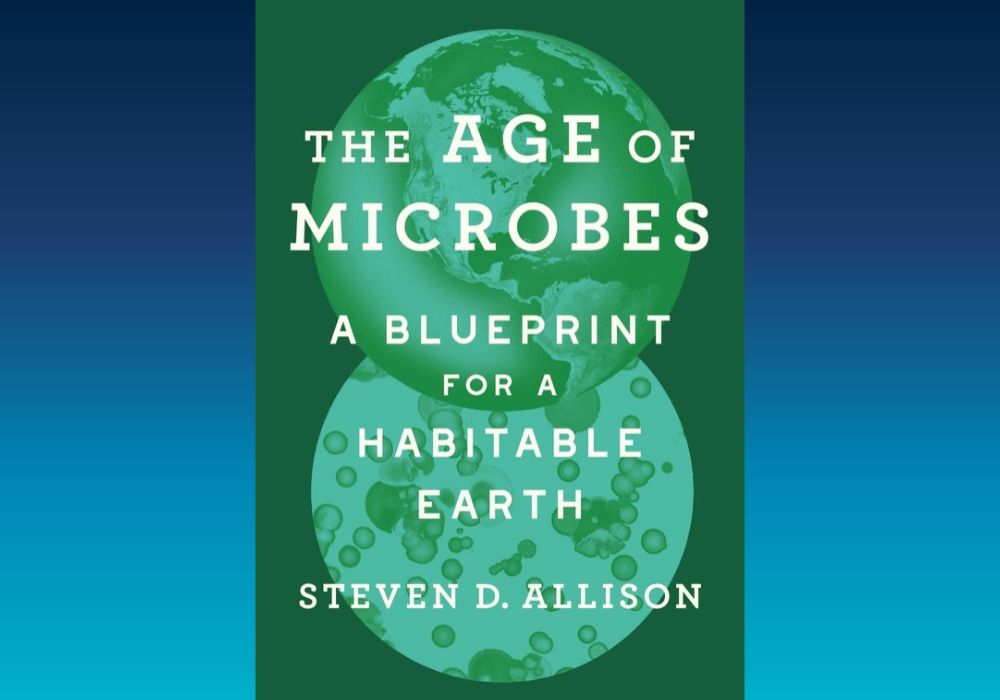
will be released Nov. 3 and is available for preorder from Harvard University Press and other booksellers.
Professor Steven Allison has spent much of his career studying a world most of us rarely notice. It is a world that surrounds us, shapes the environment and, he believes, deserves a bigger place in conversations about our planet’s future. In his first book, The Age of Microbes: A Blueprint for a Habitable Earth, he invites readers to explore these tiny life forms with fresh curiosity. For anyone who associates microbes mainly with germs, the book opens the door to a different possibility: seeing them as partners in addressing environmental challenges.
The idea grew out of an unexpected connection between Allison’s public outreach and the publishing world. A Harvard University Press editor saw his TED talk about microbes as climate solutions and encouraged him to consider a book. Coming after the pandemic, the opportunity felt especially timely. “With all the doom and gloom around climate change, I wanted to take a different approach and feature these small but remarkable life forms I’ve studied for most of my career,” he said.
The book also highlights discoveries made here at UC Irvine, including research by Allison’s colleagues on how microbes live, evolve and respond to a changing climate. He describes a field moving from fundamental discoveries toward new questions about microbial life in the natural world and how its capabilities might benefit the planet. The book offers readers a way into that unfolding work, sharing the curiosity and ambitions behind it.
To make that world approachable, Allison also draws on experiences beyond the laboratory. “I’ve really tried to make this book relatable by including some stories from my childhood and my personal experience with climate change,” he said. By sharing the backstory behind the science, he hopes to help readers connect with the people asking the questions and the reasons they care about finding answers. His own experiences give the book a personal thread for readers who might not ordinarily reach for a science book.
Ultimately, Allison hopes that a deeper appreciation of microbes will bring readers a renewed sense of connection to the planet and optimism about its future. “Microbes have seen it all over their evolutionary history, so they just might help us out of our current climate predicament,” he said. For anyone curious about the natural world and looking for a fresh perspective on its possibilities, The Age of Microbes offers an invitation to look closer. The book will be released Nov. 3 and is available for preorder from Harvard University Press and other booksellers.