
Irvine, Calif., February 24, 2026 — Building and keeping muscle is essential for lifelong health, not just athletic performance. Strong skeletal muscle supports mobility, healthy aging and recovery after injury or illness. But muscle loss is becoming more common, driven by aging, chronic disease, periods of immobility and growing concern about lean-mass loss associated with GLP-1–based weight-loss therapies.
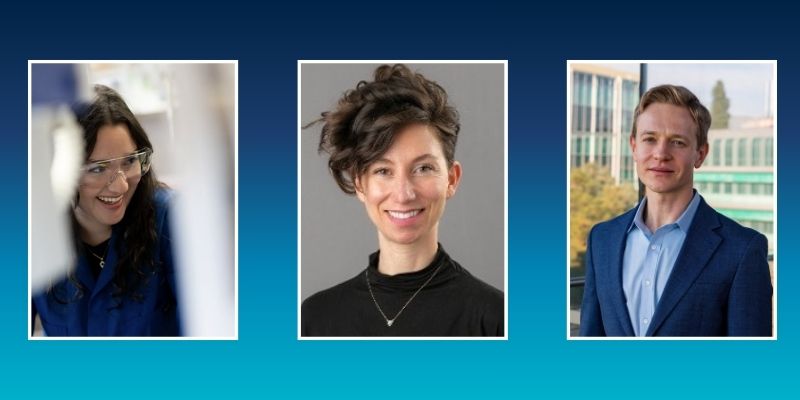
A new study published in Nature Metabolism from the University of California, Irvine’s Charlie Dunlop School of Biological Sciences reveals that muscle regeneration is guided by a timed metabolic decision inside muscle stem cells. Led by Assistant Professor Lauren Albrecht and first author Melissa Campos, a PhD student in the Albrecht lab, the research — in collaboration with Professor Maksim Plikus — shows that muscle cells don’t simply “burn fuel” in the background. Instead, they actively reprogram how they use nutrients at key moments to protect themselves, repair damage and rebuild stronger muscle tissue.
At the center of the discovery is PFKM, a muscle-specific enzyme that helps control how cells process glucose. The team found that PFKM is low in muscle stem cells and rises as cells commit to becoming mature muscle fibers. This matters because early in recovery, keeping energy production temporarily lower appears to help cells manage stress and inflammation. Later, as recovery progresses, PFKM levels rise, metabolism ramps up and muscle cells are able to fuse and strengthen. The researchers also showed the process is controllable: changing PFKM levels changed how efficiently muscle cells matured, and supplying a specific downstream metabolic building block helped restore muscle-cell differentiation when PFKM was reduced.
“These findings change how we think about muscle growth and recovery,” Albrecht said. “Rather than viewing metabolism as a passive support system, our work shows that muscle cells actively reprogram how they use fuel to decide when to repair and when to grow. We discover a precise metabolic ‘switch’ that stem cells use to form new muscle — temporarily slowing energy production to protect themselves, then reactivating metabolism to drive regeneration.”
Albrecht said the research connects basic biology to real-world need. “The findings are also compelling because they scale — from molecular mechanisms to human muscle data — and connect basic biology to an urgent clinical problem: muscle loss during aging, disease, and GLP-1–based weight-loss therapies,” she said. “Together, this positions metabolism not just as fuel, but as a therapeutic lever for preserving and restoring muscle.”
Over time, the findings could help guide strategies to protect and rebuild muscle — from recovery-focused nutrition to future therapies designed to preserve strength during aging, illness or medical treatment. “With the rapid rise of GLP-1–based weight-loss therapies and growing concern about muscle loss, it became clear that understanding how muscle exits repair mode isn’t just a basic science question — it’s a real-world problem,” Albrecht said. “That pushed us to test whether supplying specific metabolic building blocks could actually help muscles recover faster, which turned out to be one of the most exciting parts of the study.”
UC Irvine researchers encourage continued investment in muscle-health research that connects cellular mechanisms to human outcomes. With further study, this work could inform practical approaches that help people recover faster, maintain independence longer and stay healthier across the lifespan.
About the University of California, Irvine Charlie Dunlop School of Biological Sciences:
Recognized for its pioneering research and academic excellence, the Charlie Dunlop School of Biological Sciences plays a crucial role in the university’s status among the nation’s top 10 public universities, as ranked by U.S. News & World Report. It offers a broad spectrum of degree programs in the biological sciences, fostering innovation and preparing students for leadership in research, education, medicine and industry. Nestled in a globally acclaimed and economically vibrant community, the school contributes to the university’s impact as Orange County’s largest employer and a significant economic contributor. Through its commitment to exploring life’s complexities, the Dunlop School embodies the UC Irvine legacy of innovation and societal impact. For more on the Charlie Dunlop School of Biological Sciences, visit https://www.bio.uci.edu/.