
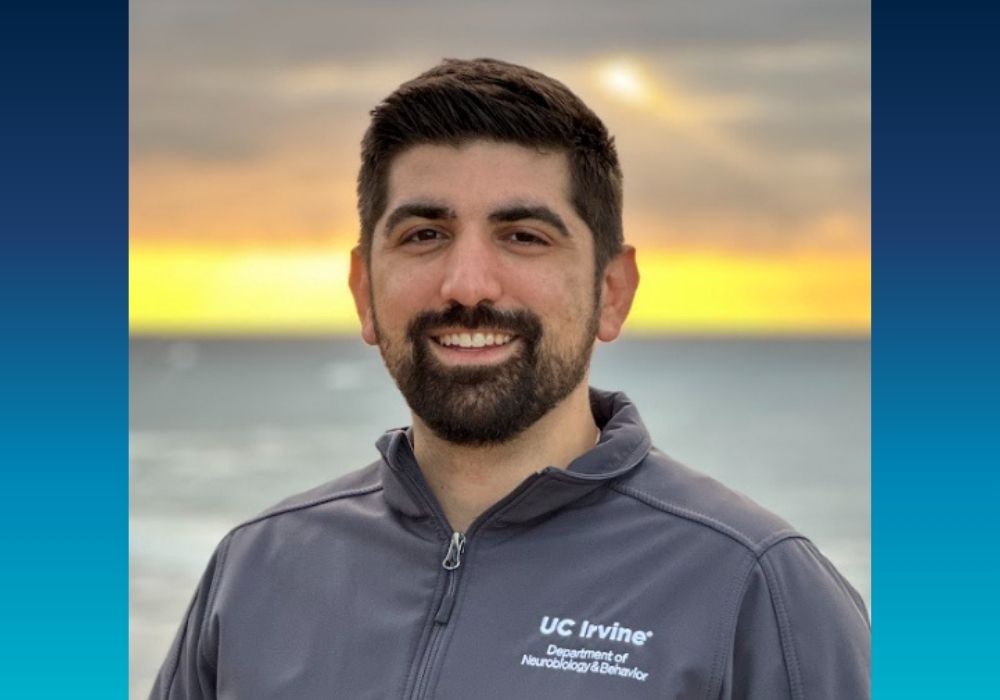
Jean Paul Chadarevian, PhD, a postdoctoral fellow in the Blurton-Jones Lab at UCI MIND, has been awarded the two-year, $120,000 Holloway Postdoctoral Fellowship from The Association for Frontotemporal Degeneration (AFTD) to support his research into novel cell-based therapies for Frontotemporal Dementia (FTD). For his project, “Therapeutic Potential of iPSC-microglia transplantation for the treatment of GRN-related Frontotemporal Dementia,” Dr. Chadarevian will investigate the use of healthy human microglia as a “living drug” to restore critical protein levels in the brain.
FTD is a leading cause of dementia in individuals under 65 and can be driven by genetic mutations in the progranulin (GRN) gene. This deficiency leads to progressive neurodegeneration, behavioral changes, and cognitive decline. While previous efforts have attempted to deliver progranulin protein directly to the brain, these strategies have faced significant hurdles, including poor biodistribution and potential toxicity.
Dr. Chadarevian’s research offers a promising alternative by utilizing induced pluripotent stem cell-derived microglia (iMG). Microglia are the brain’s primary immune cells and the natural “powerhouses” of progranulin production. By transplanting healthy human microglia into a specialized progranulin-deficient mouse model, Dr. Chadarevian aims to determine if these cells can replenish progranulin levels from within the central nervous system.
The study will employ two strategic approaches: first, to determine if early transplantation can prevent the onset of FTD-related neurodegeneration; and second, to examine whether an “inhibitor-resistant” microglial replacement strategy can reverse existing brain pathology after the disease has already progressed. Using cutting-edge tools, the team will assess the impact of these “living drugs” on neuroinflammation and lysosomal health.
“This study will provide crucial data to determine whether a cell-based therapy via microglia transplantation and replacement is a viable and effective strategy to treat FTD caused by progranulin deficiency,” Dr. Chadarevian noted in the proposal. These findings could pave the way for novel therapies not only for FTD but potentially for other neurodegenerative diseases where microglial dysfunction plays a central role.