
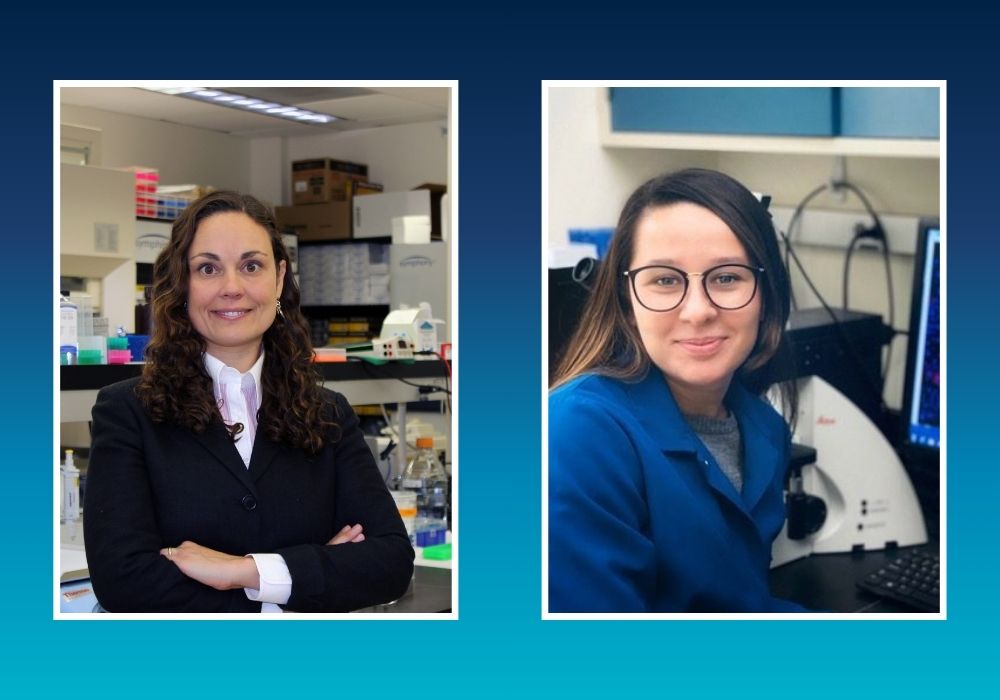
Irvine, Calif., April 22, 2026 — The opioid crisis continues to devastate families and communities across the country, and fentanyl has become one of its deadliest drivers. Although medications exist to help treat opioid use disorder (OUD), they do not work well for everyone, and long-term recovery remains difficult for many people. New research from the lab of Professor Christie Fowler at the UC Irvine Charlie Dunlop School of Biological Sciences points to a promising new approach: using artificial intelligence to help design a potential treatment that targets the brain in a different way.
Recently published in the Proceedings of the National Academy of Sciences, the study describes how researchers used an AI-based platform trained on data from postmortem brain tissue from people who had been dependent on drugs of abuse. The goal was to identify the biological changes linked to addiction and use that information to help design new compounds that might counter those changes. The team developed two candidate drugs and found that one of them, called GATC-1021, stood out as especially promising. In preclinical testing, it significantly reduced fentanyl intake in both male and female rats, remained effective after repeated dosing, and did so without notable side effects.
What makes the finding especially notable is that the drug does not work by targeting the same receptors as opioids themselves. Instead, it acts on two serotonin receptors in the brain. Fowler said that choice may help overcome an important limitation of many current strategies. “Targeting the serotonin receptors will not have this significant limitation, since it’s not the opioid receptors,” she said, pointing to the possibility of helping the brain recover without continuing to act on the same system that helped drive the disorder in the first place. She added, “This is a significant change in how we can approach drug development through polypharmacy with intentionally driven actions on multiple receptors, with consideration for the ‘fine-tuning’ of the proportional level of activity at each target.”
The researchers also found signs that GATC-1021 may do more than reduce drug-taking behavior in the moment. The treatment was linked to changes in brain pathways involved in neuroplasticity, the brain’s ability to adapt and rewire itself. The study found increased thin dendritic spines in the hippocampus and changes in gene expression tied to plasticity in the prefrontal cortex, findings that suggest the drug may help the brain adjust after the damaging effects of repeated opioid exposure. Just as importantly, the compound did not produce hallucinogenic-like effects in the animal model, despite acting on serotonin pathways that are often associated with psychedelics.
For first author Valeria Lallai, associate project scientist in the Fowler lab, the study’s strength came from how many pieces of evidence pointed in the same direction. “This study feels like winning a Connect Four game: we combined AI, gene expression, brain structure, behavior, and toxicity, all lined up at once,” Lallai said. “That is a big win in drug discovery. And the fact that it started from the brains of people who actually suffered from this disease makes it mean even more.”
While more work is needed before this therapeutic will be used in people, the findings offer fresh hope in a field that urgently needs new ideas. They also highlight the value of continued investment in addiction science, AI-guided medicine and translational research that connects laboratory discovery to real-world public health needs. As Fowler put it, “We cannot give up hope on people that have an opioid use disorder, just like we wouldn’t give up hope on someone who has another disease, like cancer or diabetes.”
About the University of California, Irvine Charlie Dunlop School of Biological Sciences:
Recognized for its pioneering research and academic excellence, the Charlie Dunlop School of Biological Sciences plays a crucial role in the university’s status among the nation’s top 10 public universities, as ranked by U.S. News & World Report. It offers a broad spectrum of degree programs in the biological sciences, fostering innovation and preparing students for leadership in research, education, medicine and industry. Nestled in a globally acclaimed and economically vibrant community, the school contributes to the university’s impact as Orange County’s largest employer and a significant economic contributor. Through its commitment to exploring life’s complexities, the Dunlop School embodies the UC Irvine legacy of innovation and societal impact. For more on the Charlie Dunlop School of Biological Sciences, visit https://www.bio.uci.edu/.