New Research Offers Hope for Patients With Hard-to-Treat Inflammatory Disease
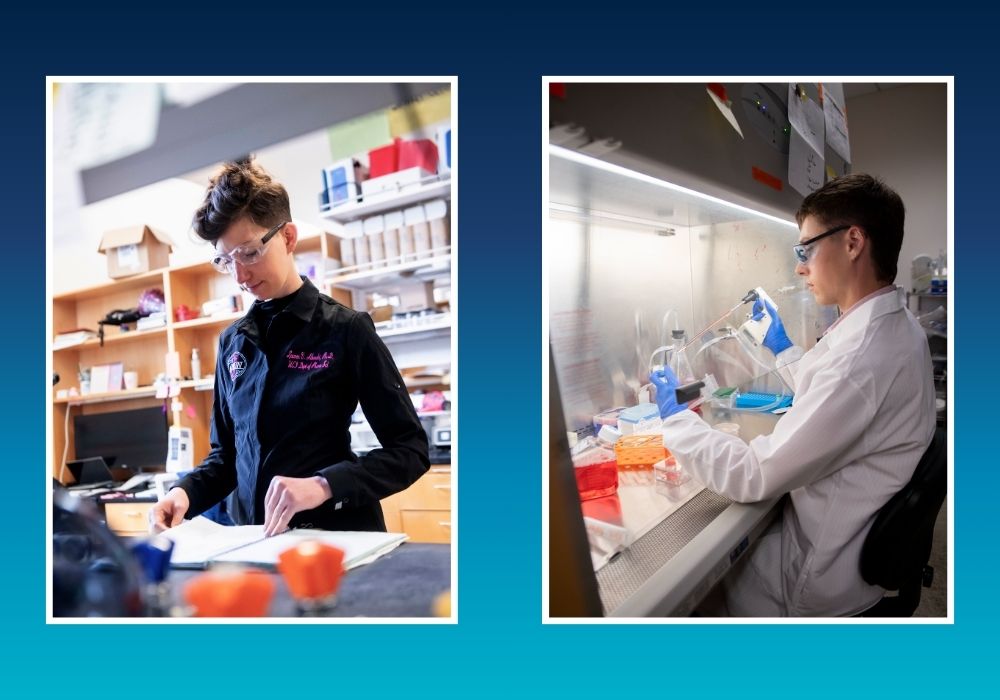
Graduate student Angela Lackner, left, and Assistant Professor Reginald McNulty of the UC Irvine Charlie Dunlop School of Biological Sciences co-authored a new study […]
Carnivorous plants look like they run on instinct: catch an insect, digest it and absorb nutrients. But for scientists, a core question has remained difficult to answer: how does a plant “know” it has caught prey, and how does it decide which chemical tools to deploy next?
Many of today’s most serious diseases are driven by harmful proteins inside the body. These proteins can fuel cancer, chronic inflammation and neurodegenerative disorders, yet scientists still do not have good ways to target many of them.
A team of scientists from UC Irvine, UC Santa Barbara and collaborating institutions has uncovered a striking new way that harmful bacteria gain a foothold in the body: They deliver a protein into human cells that helps them move through the dense, beating barrier of airway cilia and settle into a safer place to grow.
Dr. Benjamin Morehouse studies a unique branch of immunology called “ancient immunity.” Like an archeologist searching for clues among ancient ruins, Morehouse scours the ancient genomes of bacteria for yet undiscovered immune treasures.
When cells are stressed by aging, infection or environmental damage, they can release fragments of their own DNA into the cell interior. This misplaced
Nestlé Health Science, a global leader in the science of nutrition, announced today a longitudinal study designed to discover how lifestyle factors—specifically dietary fiber—shape the human microbiome and influence health.
Irvine, Calif., October 1, 2025 — Viruses that prey on bacteria — known as bacteriophages, or simply phages — are among the most numerous
Professor Suzanne Bohlson of the Charlie Dunlop School of Biological Sciences has been awarded a National Science Foundation S-STEM grant. She leads a team
Triple-negative breast cancer (TNBC) is one of the most aggressive and difficult-to-treat forms of breast cancer. Unlike other breast cancer subtypes, TNBC lacks the