UCI-Led Study Identifies Promising Target for Pancreatic Cancer That Spreads to The Liver
Study team members UC Irvine Associate Professor Christopher Halbrook, first author and UCI PhD graduate Rima Singh, and collaborator Nina Steele, PhD, of the

Study team members UC Irvine Associate Professor Christopher Halbrook, first author and UCI PhD graduate Rima Singh, and collaborator Nina Steele, PhD, of the
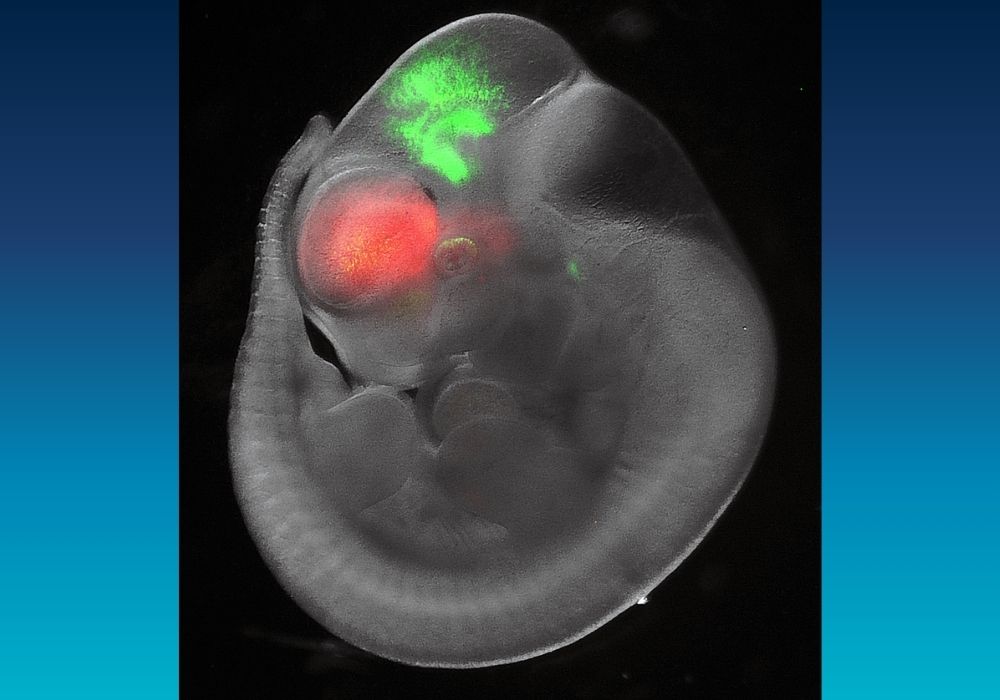
A transgenic mouse embryo in which AI-designed regulatory DNA sequences drive gene expression in the forebrain (red) and in the midbrain (green). Image credit:

When biologist Maksim Plikus took the leap into the multibillion-dollar market for hair-loss treatments, he had lots of local support.
Alzheimer’s disease may look similar from one person to another even when different biological processes are driving the damage, according to a new study led by researchers at the University of California, Irvine.
Immunotherapy has transformed outcomes for many cancer patients. Unlike conventional treatments, these therapies do not attack tumors directly. Instead, they enable the body’s own immune system to identify and kill cancer cells that had previously escaped elimination.
UC Irvine researchers Vivek Swarup, Ph.D., and Elizabeth Head, Ph.D., have received a major new award from the National Institutes of Health to investigate

UC Irvine’s Department of Systems Biology explores how life’s interconnected systems lead to healthier people, stronger science and new discoveries.

Christine Bonadonna sampling invertebrates at a pond near Yosemite National Park. Photo credit: Celia Symons Irvine, Calif., July 14, 2026 — On a summer

A diversity of stingray defensive spines surrounds a bluespotted ribbontail ray (Taeniura lymma), illustrating variation in spine shape and serration morphology among species. Photo